
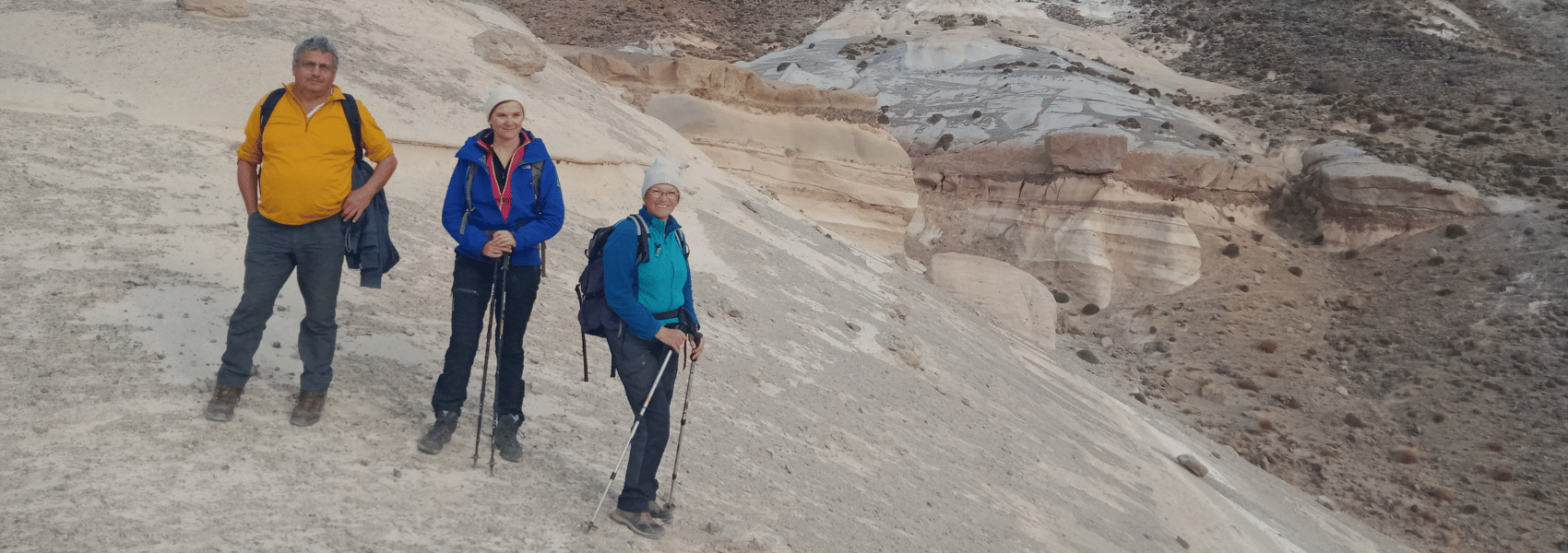
Mount Siroua Trek – Volcanic Landscapes & Berber Villages
Mount Siroua Trek – A Volcanic and Cultural Journey in Southern Morocco The Mount Siroua Trek is one of Morocco’s most authentic trekking experiences.Firstly, it takes place on a volcanic massif reaching 3,305 meters in altitude.Secondly, Mount Siroua lies between the High Atlas and the…
Mount Siroua Trek – A Volcanic and Cultural Journey in Southern Morocco
The Mount Siroua Trek is one of Morocco’s most authentic trekking experiences.
Firstly, it takes place on a volcanic massif reaching 3,305 meters in altitude.
Secondly, Mount Siroua lies between the High Atlas and the Anti-Atlas ranges.
As a result, the region offers diverse landscapes and wide panoramic views.
Overall, travelers experience a land shaped by nature and tradition.
To begin with, the journey usually starts in the city of Marrakech.
From there, travelers cross the scenic Tizi n’Test Pass at 2,100 meters.
Along the way, impressive views open over valleys and remote villages.
Afterward, the road descends toward wide plains filled with argan trees.
In this transition, the landscape gradually changes toward southern Morocco.
Next, the route continues toward Taliouine, Morocco’s saffron capital.
Indeed, this region produces some of the finest saffron in the world.
Moreover, saffron cultivation supports many local families.
Every year, the saffron festival celebrates agricultural traditions.
Consequently, saffron remains central to regional culture and identity.
During the trek, hikers explore remote Berber villages in the mountains.
In addition, stone houses blend naturally into the volcanic terrain.
Meanwhile, ancient fortified granaries overlook valleys and trails.
For this reason, the region feels preserved and deeply authentic.
Likewise, daily life follows rhythms shaped by the mountains.
Furthermore, terraced agriculture covers the slopes of Mount Siroua.
For example, farmers grow barley, wheat, and saffron on narrow terraces.
At the same time, dry-stone walls protect fields from erosion.
Thus, agriculture adapts efficiently to the rugged environment.
Thanks to this, volcanic soil enriches the land naturally.
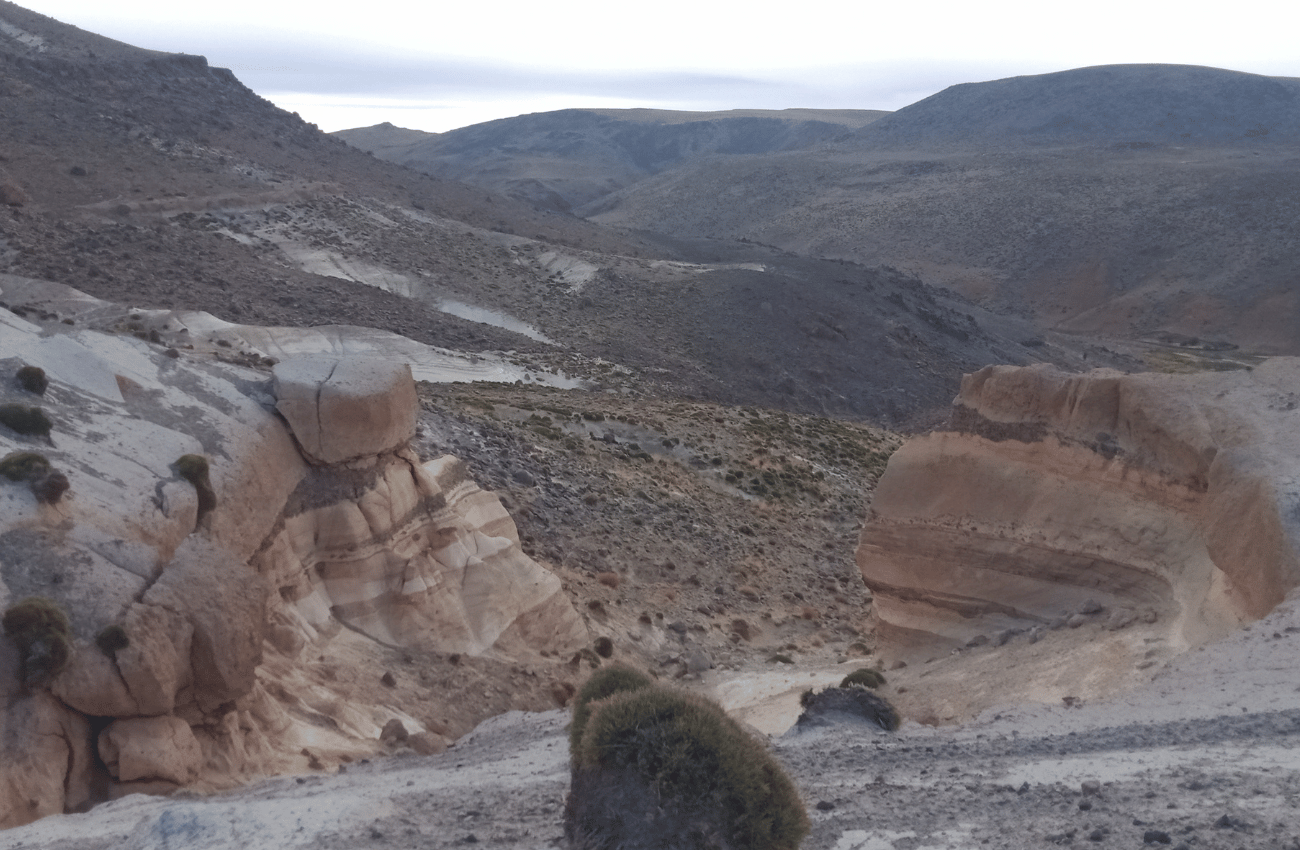
Additionally, Mount Siroua’s volcanic origin defines the scenery.
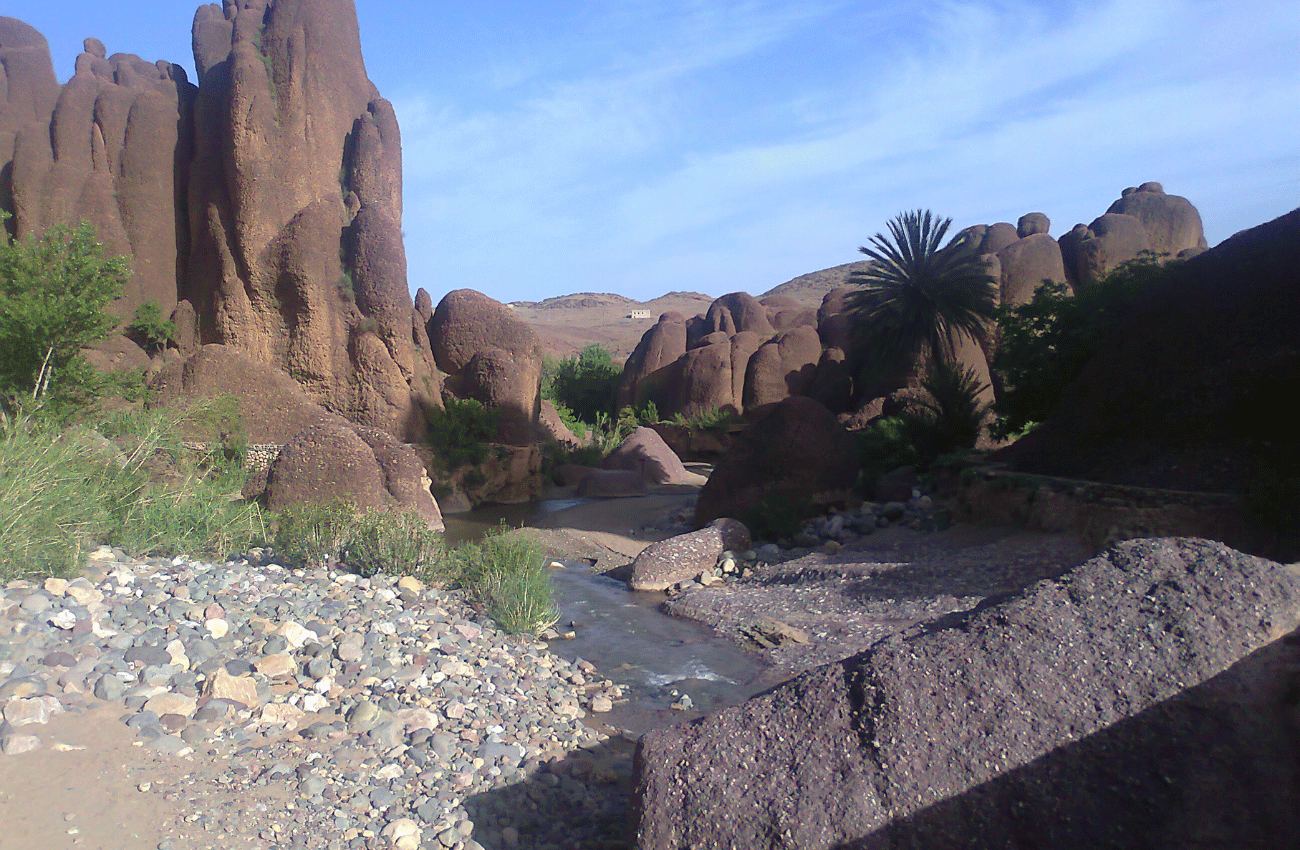
Therefore, basalt rocks, plateaus, and deep gorges dominate the landscape.
Similarly, sheep herding remains essential to local livelihoods.
During summer, flocks graze freely on high mountain pastures.
In this way, shepherds preserve ancestral traditions.
Meanwhile, trekking routes range from gentle walks to demanding ascents.
Nevertheless, each stage rewards hikers with silence and open views.
Above all, the trek encourages a deep connection with nature.
Likewise, travelers engage closely with local culture and mountain life.
Finally, the return journey crosses the Tizi n’Tichka Pass at 2,260 meters.
Here, dramatic High Atlas scenery concludes the adventure.
In conclusion, the Mount Siroua Trek blends nature, culture, and adventure.
Overall, it suits travelers seeking authenticity and unforgettable experiences.
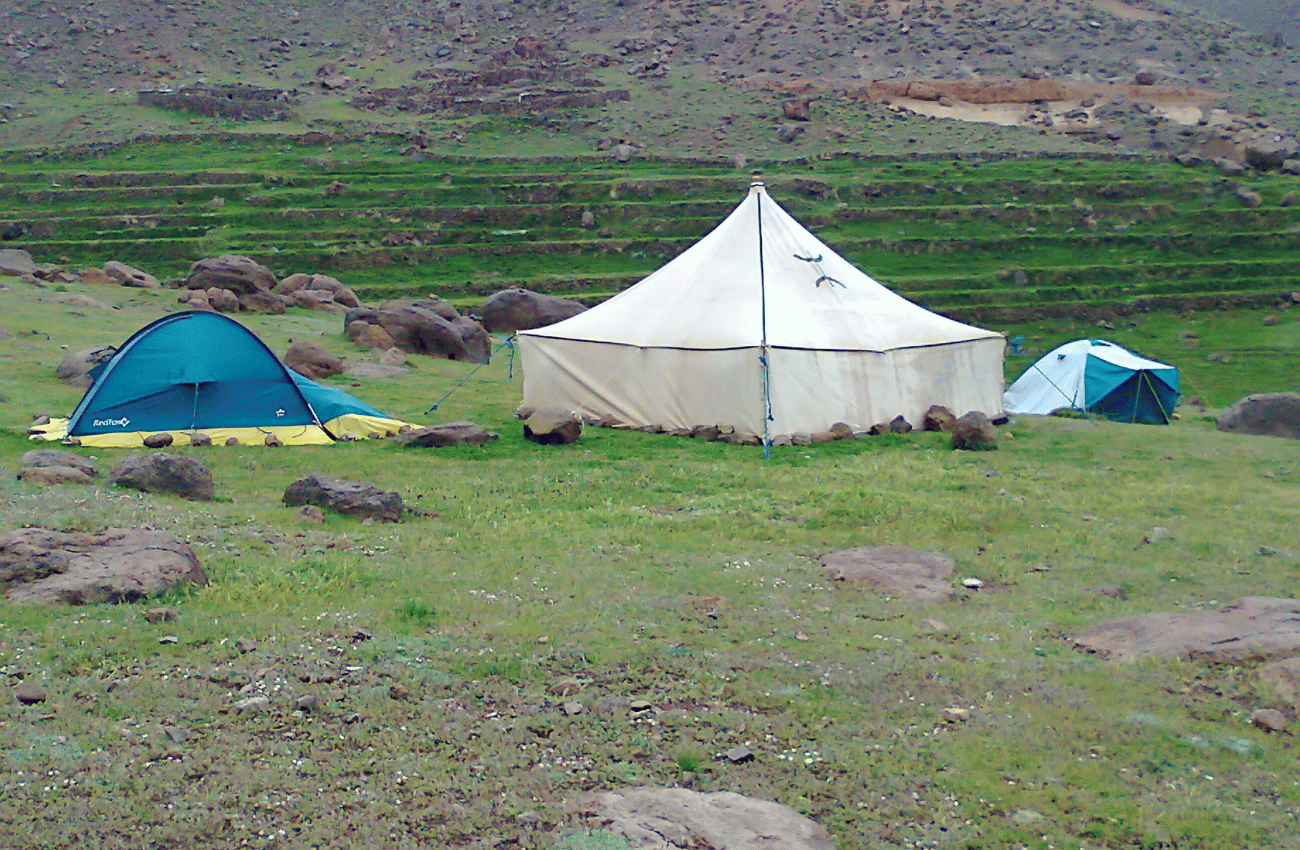
Our gallery
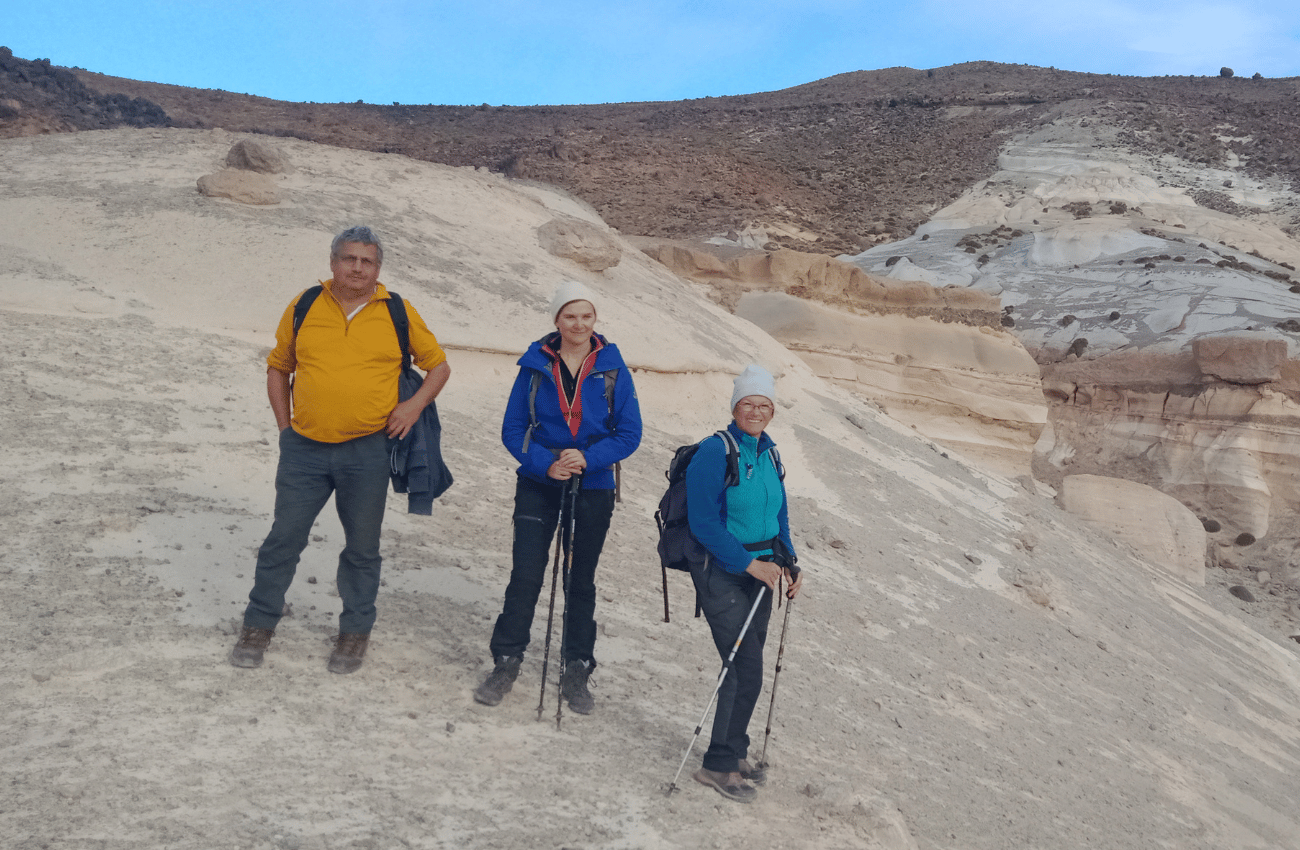
Day 1: ARRIVAL DAY
Day 2 : MARRAKECH - TIZI N -TEST PASS – TISLIT
Day 3 : TISLIT – AZIB TIZGUI
Day 4 : AZIB TIZGUI - GUILIZ (2900 M) – AZIB TAGRARA
Day 5: TAGRAGRA - SIROUA ANTICLINE (3305 M) - TISWITINE
Day 6: TISWITINE - TIZOUADE
Day 7 : TAMAZIRTE - TIZI N'TICHKA – MARRAKECH
Day 8 : DEPARTUR DAY
TOUR LOCATION
POST A REVIEW
- Airport pick-up and transfer to the hotel
- All transfers in a private tourist minibus
- Accommodation in hotels, riads, guesthouses or bivouacs
- Full board during the tour (meals included)
- Assistance of a professional local team (guide, cook, muleteers, drivers)
- All the necessary logistics for the smooth running of the trip
- International flight
- Travel insurance
- Drinks and personal expenses
- Tips for the team
- Entrance fees to monuments (if not specified in the program)
- Meals in Marrakech
Practical Information – Siroua & Valleys Trek
Duration:
8 days, including 5 days of trekking
Level:
Moderate to challenging – good physical condition required
The ascent of Mount Siroua (3310 m) does not require technical skills, but it does demand physical effort.
ACCOMMODATION
— In Marrakech (2 nights):
Accommodation in a locally rated 3-star hotel, based on double rooms with private bathrooms.
The hotel usually features a spa and an outdoor swimming pool. Conveniently located in the modern district of Guéliz, it is ideal for the first and last nights of the tour. Several local restaurants are nearby, and the main attractions are easy to reach. On foot, Jemaa el-Fna Square is about 35 minutes away.
— 5 nights in comfortable , fully serviced tents
MEALS
— Breakfast:
Hearty breakfast including coffee, tea, hot chocolate, jam, butter, bread, and cereals.
— Lunch:
Meals prepared by the cook using fresh local products.
— Dinner:
Soup, main course (tajine, couscous, rice, etc.), dessert, and tea/herbal tea.
— During the day:
Energy snacks such as dates, peanuts, pralines, and biscuits.
— At arrival at camp or refuge:
Mint tea and biscuits as a welcome snack.
Drinks
In Morocco, untreated water (from springs, wells, or tap) is not recommended for drinking.
For ecological reasons, we ask you to avoid plastic bottled water and to bring a reusable water bottle (preferably insulated) along with purification tablets or a filter bottle.
During the trek, you will encounter several water sources.
Please note: mules do not carry drinking water for the group.
TIPS (GRATUITIES)
Tipping is part of local culture and common practice.
This gesture of appreciation—depending on the itinerary, group size, and duration—is always valued and often expected by the team.
We recommend preparing several envelopes before your trip:
-
One for the guide, the key person ensuring the success of your journey.
-
One for the cook.
-
One for the muleteers and/or camel drivers.
Recommended amount:
Approximately €50 per person for a one-week trip.
TRANSPORT
All transfers are done by minibus.
All vehicles used during the trip are licensed for tourist transport and dedicated exclusively to the group.
Please note:
Wearing a seatbelt is mandatory in all vehicles, both front and back seats, whenever a seatbelt is available—regardless of the local regulations.
By booking this trip, you agree to comply with this safety requirement.
The agency cannot be held responsible for personal injury or material damage resulting from non-compliance.
YOUR EQUIPMENT
Your belongings are divided between a daypack, which you carry during the hike, and a duffel bag with a padlock, transported by the logistics team (mules or vehicle).
Essential Clothing & Gear
— Moisture-wicking underwear (quick-drying)
— Fleece jacket
— Waterproof and breathable shell jacket
— Trekking pants
— Thermal leggings
— Warm hat and gloves (for cool evenings and the summit day)
— Cap or sun hat
— Sunglasses (category 3 minimum, 4 for high altitude)
— Rain poncho
— Minimum 2-liter water bottle or hydration system
— Pocket knife
— Micropur tablets for water purification
— Toilet paper + lighter (for disposal if necessary)
Footwear & Technical Equipment
— Waterproof high-cut hiking boots with good grip (Contagrip, Vibram or similar)
— Headlamp
— Telescopic trekking poles
Sleeping Gear
— Sleeping bag:
Comfort temperature:
-
–10°C / –5°C in February , March , April and May , November
-
–5°C / +5°C in September , October
— Sleeping bag liner
Baggage
— Daypack: 30–40 L, with ergonomic back support and wide shoulder straps
— Duffel bag: 80–100 L (maximum 12 kg), soft-sided, carried by mules or vehicle
Other Items
— Change of clothes
— Toiletry kit & towel
— Swimsuit & bath towel
— Sleepwear
— Plastic bags for waterproofing your belongings
— Needle and thread
— Anti-theft pouch for documents, money, insurance papers (to be kept on you at all times)
Note: Drones are strictly prohibited in Morocco.
SPECIAL DIETS
Gluten-free diets cannot be accommodated by the local service provider.
LUGGAGE TRANSPORT
Your main luggage (maximum 12 kg) is transported by mules.
You walk only with your light daypack containing your daily essentials.
CURRENCY
The local currency is the Moroccan Dirham (MAD).
Approximate exchange rate (2025): €1 ≈ 10 MAD.
We recommend bringing cash euros to exchange on arrival (airport, hotels, banks).
ATMs (Visa, Mastercard, etc.) are widely available in major cities, including Marrakech airport.
Credit cards are accepted in most shops and restaurants in urban areas.
pfeib
Good