Morocco Destination Guide
Chefchaouen
The Blue CityThe City That
Stops You in Your Tracks
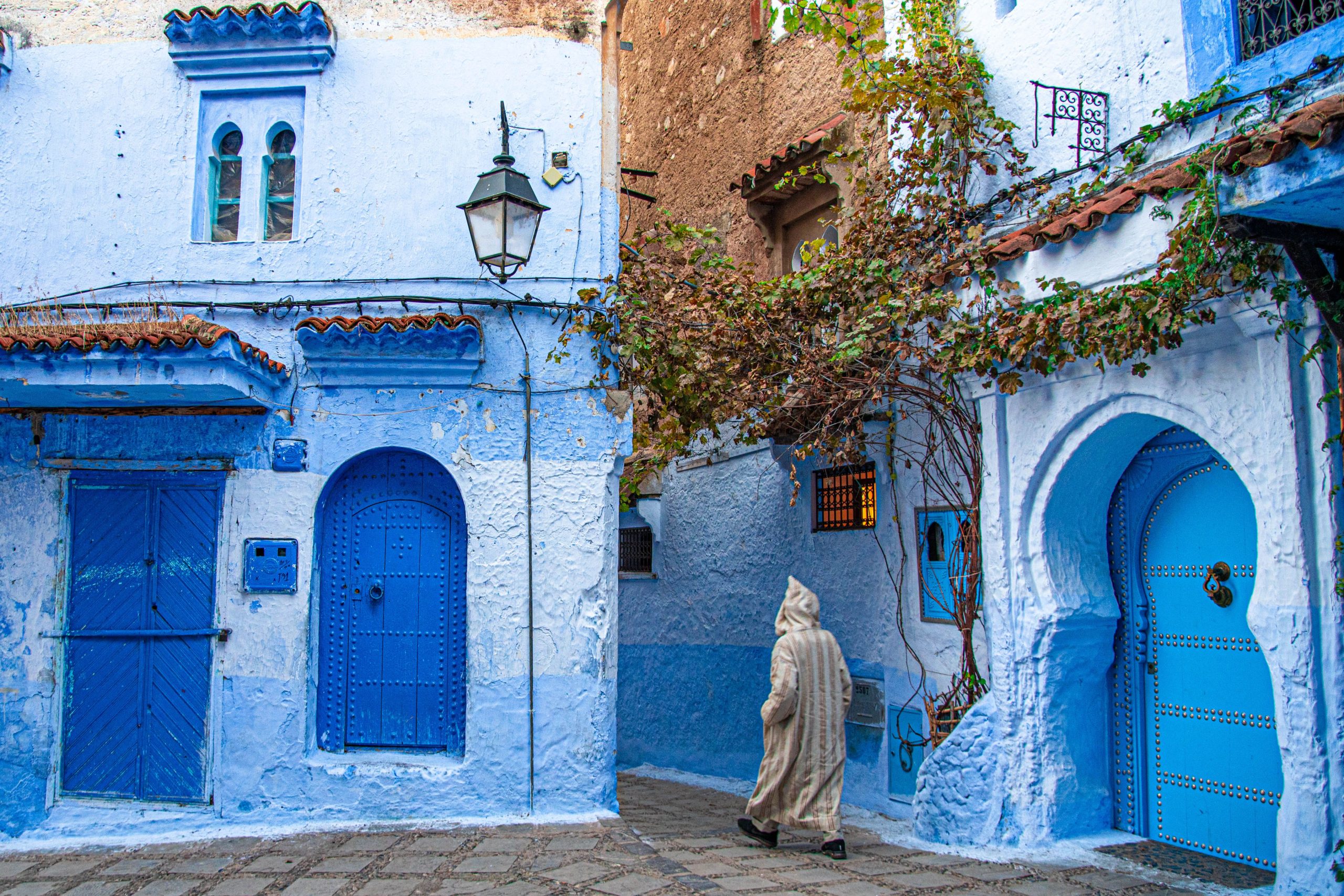
There is nowhere else in Morocco quite like Chefchaouen. Tucked into a steep fold of the Rif Mountains, the medina of the Blue City is painted in an extraordinary range of blues, from the palest sky colour to a deep cobalt that seems almost electric in the afternoon light. Every lane, staircase, doorway and flowerpot is a different shade and the effect of wandering through the medina is unlike anything else in North Africa.
Founded in 1471 as a fortress to defend against Portuguese invasions, Chefchaouen grew when Andalusian Muslims and Jews expelled from Spain arrived in the early 16th century. They brought the whitewash traditions of Andalusia and a culture of flowers and decorated doorways that still defines the medina today. The blue colour was introduced by Jewish residents who associated it with heaven.
Beyond the medina, the setting of Chefchaouen is extraordinary. The mountains rising directly above are laced with hiking trails, and the Akchour Waterfalls in the national park a short drive away are one of the finest natural sites in northern Morocco, with mountain streams cascading through deep gorges of cedar and oak.
Quick Facts
What to See
and Do
The blue medina, the mountain trails, the waterfalls and the quiet corners that most visitors never find.
The Blue Medina
The medina of Chefchaouen is the reason most people come and it does not disappoint. Walk without a map or destination, allowing the blue lanes to reveal themselves gradually. Every corner offers a different composition of blues, flower pots, wooden doors and cats in the afternoon sun.
Plaza Uta el-Hammam
The main square, surrounded by cafes and the old Kasbah walls, is the heart of Chefchaouen. In the morning it fills with locals over coffee ; in the evening with travellers from every corner of the world. The Kasbah houses a small museum on the Andalusian heritage of the city.
Akchour Waterfalls
A 30-minute drive leads to the Akchour Waterfalls trail. The path follows the Oued Kelaa river through an extraordinary gorge before arriving at a dramatic cascade dropping into deep green water. Further up, God's Bridge natural rock arch is one of the most remarkable geological formations in Morocco.
Ras el-Ma Spring
At the upper edge of the medina, the Ras el-Ma spring is where a mountain stream cascades down the hillside and local women wash clothes in the traditional way. It is one of the most beautiful spots in the city and the gateway to the hiking trails climbing into the Rif Mountains.
The Spanish Mosque
A 20-minute walk up the hillside brings you to the ruined Spanish Mosque. The view over the blue medina, the valley and the Rif Mountains is the finest panoramic view of Chefchaouen available and is best experienced at sunset.
Craft Shopping
Chefchaouen has a distinctive craft tradition rooted in its Andalusian heritage. Wool blankets, djellabas, leather goods and pottery are found throughout the medina. The quality and the unhurried atmosphere here are a welcome contrast to the more pressured souks of Marrakech or Fes.
How to Make the
Most of Your Time
Chefchaouen rewards those who slow down. These are the experiences our guides recommend to every visitor who wants to go beyond the photographs.
Early Morning in the Medina
Chefchaouen receives a very large number of day visitors from Tangier and Fes who typically arrive mid-morning. Being in the medina before 8am means having the blue lanes almost to yourself, in the most beautiful light of the day, with locals going about their morning routines.
Hike to the Spanish Mosque at Sunset
The 20-minute walk to the Spanish Mosque is one of the most rewarding short hikes in northern Morocco. Arriving at the top as the sun begins to lower, with the blue medina spread below and the valley stretching south, is one of those travel moments that stays with people long after they leave.
Full Day Hike to Akchour Waterfalls
The hike to Akchour is the finest natural experience from Chefchaouen. The trail follows the Oued Kelaa river through extraordinary gorges past turquoise pools to the waterfall and, for those with energy, the vast God's Bridge rock arch. The return in the afternoon light, with the gorge glowing gold, is worth the effort alone.
Mint Tea on a Rooftop Terrace
Chefchaouen has several rooftop terraces looking directly down over the blue lanes. Sitting with fresh mint tea watching the city below, with the mountains rising behind and the late afternoon light doing extraordinary things to the blue walls, is a perfectly Chefchaouen way to spend an hour.
When to Visit
Chefchaouen
Chefchaouen is open year-round and the altitude keeps temperatures comfortable in summer. The main challenge is avoiding the peak day-visitor crowds, which are heaviest in summer on weekends.
March to May. Perfect 15 to 25°C, the mountains are green, wildflowers are out and the light in the medina is at its most beautiful.
June to August. Warm but comfortable at altitude, around 25 to 30°C. The city is at its busiest with day visitors. Early mornings are still wonderful.
September to November. Fewer visitors, beautiful golden light, comfortable temperatures and the mountains beginning to change colour. The ideal season for photography.
December to February. Cold 8 to 15°C with occasional snow on the peaks above. The medina is at its quietest and most atmospheric. Snow on the blue walls is a remarkable sight.
Journey Through
Chefchaouen
Chefchaouen features as a key stop on our Northern Morocco journey, combining the Blue City with Tangier and the medieval medina of Fes.
 7 Days
Northern Morocco : Tangier, Chefchaouen and Fes
One night in Tangier, two nights in Chefchaouen with the Akchour Waterfalls hike, two nights in Fes and a final night in Casablanca before departure.
View JourneyReady to Explore the
Blue City?
Tell us how many nights you have in Chefchaouen and what matters most to you. We will arrange a private guide, the best riad in the medina and every experience around your interests.