Is Morocco Safe for Travelers?Everything You Need to Know
Morocco is one of the safest travel destinations in Africa and the Arab world. I have been guiding American and European travelers here for over 25 years and I can tell you that the vast majority of visitors leave with nothing but wonderful memories. That said, like any destination, Morocco rewards travelers who come prepared and aware.
Safety in Morocco is not a yes or no question. It depends on where you go, how you travel and how you approach situations when they arise. This article covers everything you need to know honestly the real picture, not the exaggerated fears and not the unrealistic reassurances.
The Overall Picture
Morocco consistently ranks as one of the safest countries in Africa for tourism. The country welcomes over 13 million international visitors every year. The government invests heavily in tourism infrastructure and tourist police are present in all major cities and attractions.
Violent crime against tourists is extremely rare. The concerns most travelers encounter are petty in nature aggressive touts in medinas, unsolicited guides, minor scams and occasional pickpocketing in crowded areas. These are annoying but not dangerous, and they are easy to avoid with a little awareness.
Safety by Region
Marrakech
The medina can feel overwhelming but it is safe. The main issues are touts and unofficial guides near Jemaa el-Fna square. Stay confident, walk with purpose and say no clearly. Tourist police are visible throughout the city.
Sahara Desert
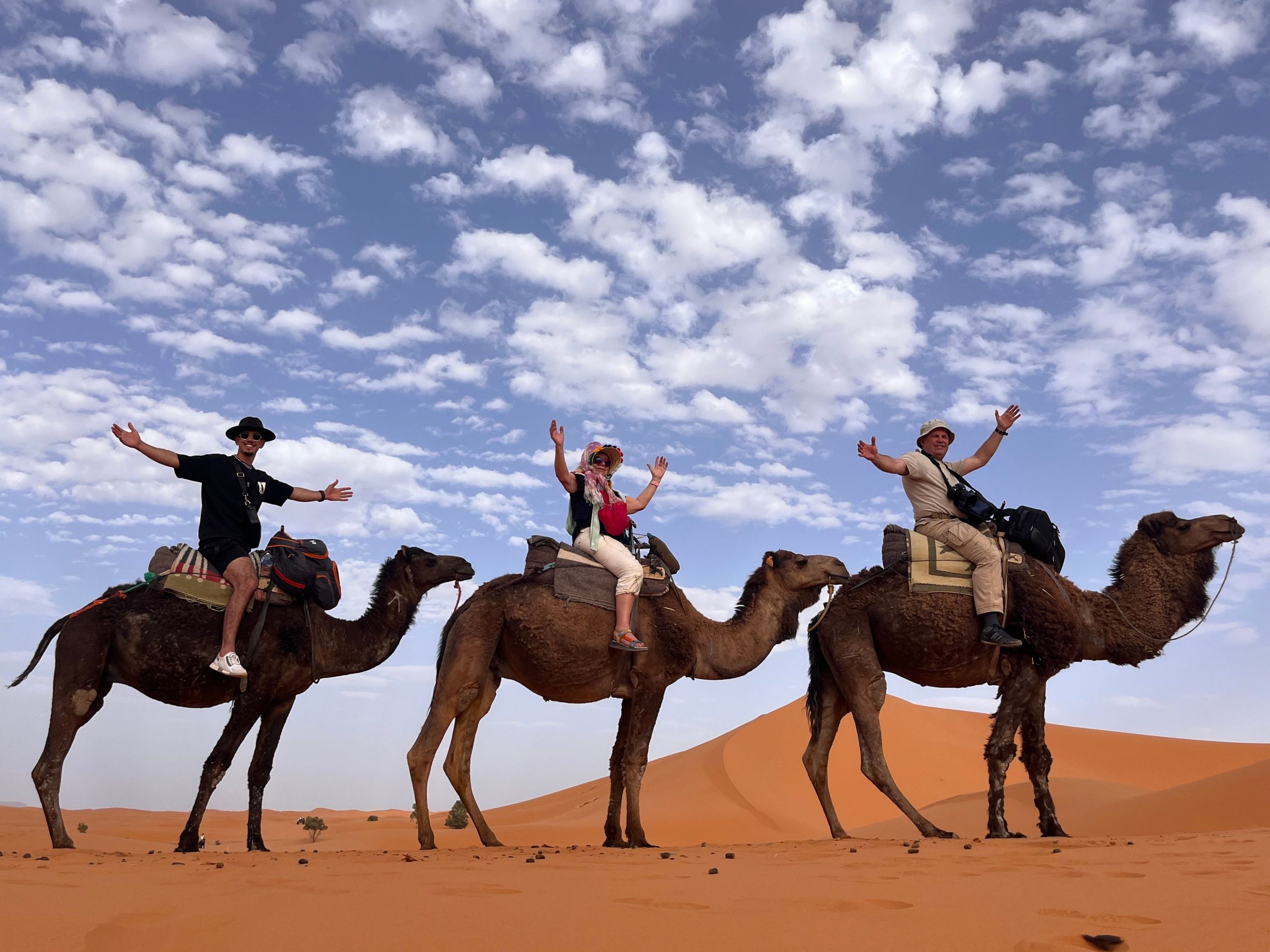
The desert is one of the safest environments in Morocco. Remote, peaceful and completely free of the petty hassle found in cities. Your guide knows the terrain and the local communities. There is nothing to worry about here.
Atlas Mountains
Trekking in the Atlas is safe and well established. The mountain communities are welcoming and hospitable. Always trek with a certified guide who knows the terrain, especially at altitude above 3,000 metres.
Fes and Imperial Cities
The medinas of Fes and Meknes are labyrinthine and easy to get lost in, which is where unofficial guides prey on confused tourists. Book a licensed official guide through your hotel or tour operator and you will have no issues at all.
Chefchaouen
One of the most relaxed and visitor-friendly towns in Morocco. The blue city is calm, walkable and almost completely free of the hassle you find in larger cities. Families and solo travelers both feel completely comfortable here.
Busy Souks and Squares
Jemaa el-Fna in Marrakech and the main souks in Fes are where most petty issues occur. Keep your bag in front of you, avoid accepting help from strangers and do not follow anyone who approaches you uninvited. Simple awareness is enough.
Common Situations and How to Handle Them
The Unofficial Guide
Someone approaches you near a medina entrance and offers to show you around. They seem helpful. After an hour they take you to a carpet shop or a cousin's restaurant and expect a large tip or commission. The solution is simple: book a licensed guide through your hotel or tour operator before you go out. A licensed guide carries an official badge and is accountable to the local tourism authorities.
The Friendly Stranger
Someone strikes up a conversation, seems genuinely friendly and eventually steers you toward a shop or asks for money. In Morocco hospitality is real and most people who speak to you are simply being friendly. But in tourist areas, be aware that some approaches are commercial in nature. A polite but firm response works every time.
Taxi Overcharging
Petit taxis in Marrakech and other cities should always use the meter. If the driver refuses, agree on a price before you get in. Better yet, use a ride-hailing app like Careem or ask your hotel to call a taxi for you. Grand taxis for intercity travel have fixed prices ask your hotel what the correct fare is before you travel.
Photographing People
Always ask permission before photographing local people, especially women and people working in the souks. Some will say yes happily, some will ask for a small payment and some will say no. Respect their answer. In the Sahara and Atlas Mountains, people are generally very happy to be photographed.
Safety for Solo Female Travelers
Solo female travel in Morocco is completely possible and many women do it every year. That said, women traveling alone should be prepared for more attention than they might receive at home comments, persistent approaches and staring are common in some areas, particularly in smaller cities and rural markets.
Dressing modestly covering shoulders and knees reduces unwanted attention significantly and is also a sign of respect for local culture. In Marrakech, Fes and other major tourist cities, anything goes in terms of dress. In smaller towns and villages, modesty is appreciated.
The medinas at night require more care for solo women. Travel with a guide in the evenings or ask your riad to arrange transport. The Sahara, Atlas and coastal towns like Essaouira and Chefchaouen are very comfortable for solo female travelers at any time of day.
Health and Food Safety
Moroccan food is safe and delicious. In established restaurants and riads the hygiene standards are good. Be more careful with street food from stalls in very busy markets not because it is dangerous but because it is worth choosing stalls that look clean and busy. Busy means the food is fresh.
Do not drink tap water anywhere in Morocco. Bottled water is cheap and widely available everywhere including in the Sahara. Use it for brushing teeth too if you have a sensitive stomach.
No vaccinations are required to enter Morocco as a US or European citizen. It is worth being up to date on standard vaccines hepatitis A, typhoid and tetanus. If you are trekking in the Atlas, make sure you have travel insurance that covers mountain rescue.
Practical Safety Tips
| Situation | What to Do |
|---|---|
| Getting lost in a medina | Stay calm, look for a landmark or ask your riad to send someone to meet you |
| Approached by a tout | Say "la shukran" (no thank you) firmly and keep walking |
| Taxi dispute | Always agree the price before getting in or insist on the meter |
| Bag security | Keep bags in front, use inside zip pockets in busy areas |
| Emergency | Police: 19 / Tourist Police: 0524 38 46 01 / Ambulance: 15 |
| Lost passport | Contact your embassy immediately US Embassy Rabat: +212 537 63 33 33 |
| Medical emergency | Private clinics in major cities are good Polyclinique du Sud in Marrakech is recommended |
| Travel insurance | Essential make sure it covers medical evacuation and trek rescue if relevant |
The Safest Way to Travel Morocco
The single most effective thing you can do to ensure a safe and hassle-free experience in Morocco is to travel privately with a reputable local operator. A private tour means you have a guide who knows the country, speaks the language, understands the culture and can navigate any situation that arises. It removes the vast majority of the issues independent travelers encounter.
At Authentic Travels Morocco we handle everything from airport arrival to departure. Our travelers never have to negotiate taxis, deal with touts or find their way through unfamiliar medinas alone. They simply experience Morocco. That is what a private tour is for.
The travelers who have the worst experiences in Morocco are usually those who arrive without a plan, without a guide and without a basic understanding of how things work. The travelers who have the best experiences arrive prepared, stay curious and trust the people they are with. Morocco is extraordinary. Come prepared and you will love every moment of it.
Travel Morocco with Confidence
A private tour means we handle everything. You focus on the experience. We handle everything else.
Plan Your Private Tour